
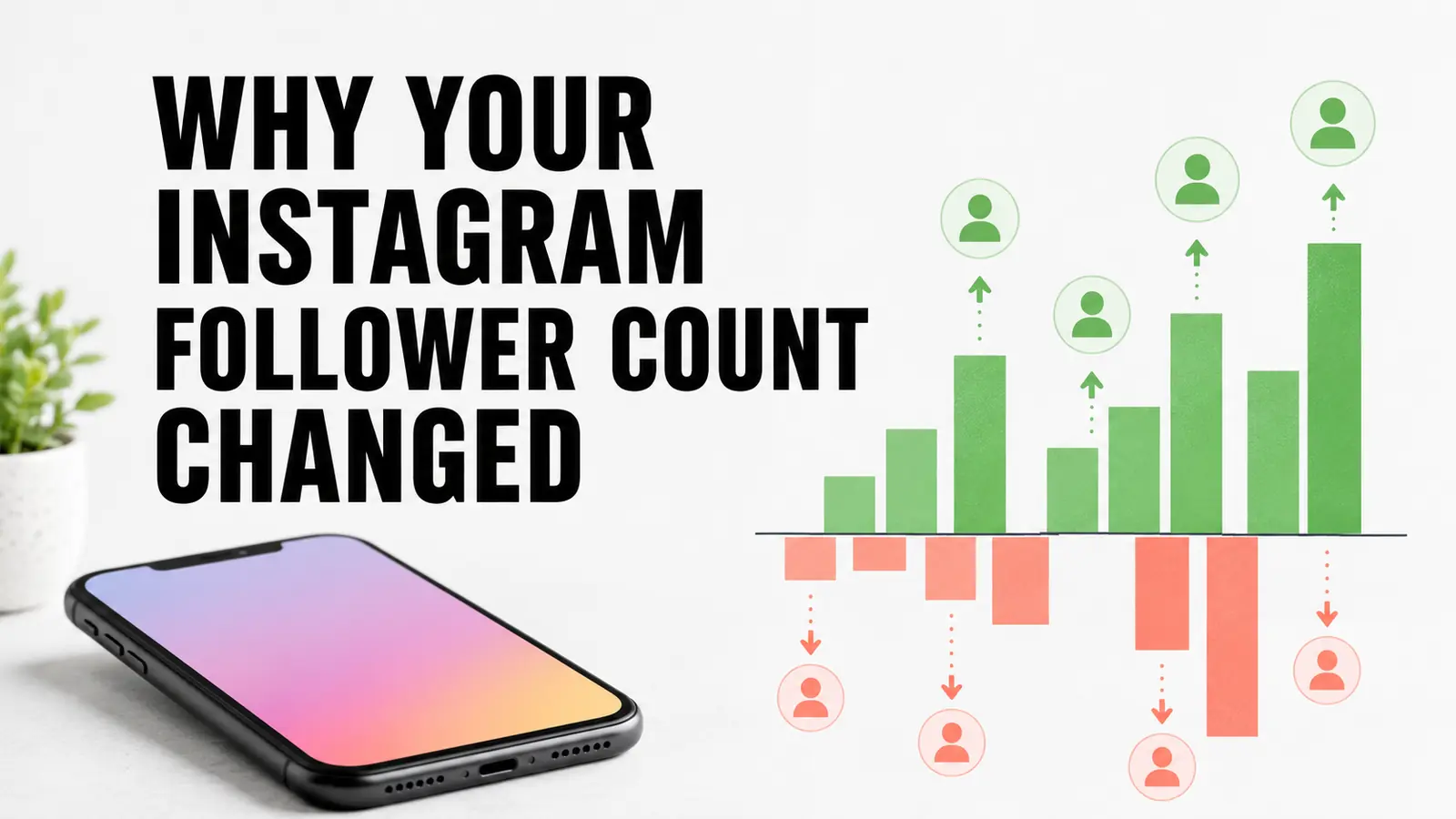
Your follower count is a total at a point in time. When it changes, the number shows the net result of gains and losses, not the individual accounts involved. A flat total can even hide substantial movement.
One Instagram export shows the follower list represented in that snapshot and can identify current relationship categories. To identify who later unfollowed, you need at least two exports and an account-level comparison between the earlier and later lists.
Net change combines gains and losses
Suppose an account begins the week with 1,000 followers and ends with 1,003. The visible change is plus three, but many combinations could produce it:
- Three new followers and no losses.
- Ten new followers and seven losses.
- Twenty new followers and seventeen losses.
The total alone cannot distinguish these scenarios.
A flat count does not mean nothing changed
If five accounts follow and five accounts unfollow during the same interval, the total can return to its starting value. Looking only at the number would hide all ten account-level changes.
This is why screenshots of profile totals are not enough to identify unfollowers. They record the size of the audience, not its membership.
Why totals can decrease
A decrease may reflect accounts that unfollowed, accounts that were deactivated or removed, or other changes represented by Instagram's current data. A total does not provide a reason for each missing account, and an export comparison should not invent one.
Use follower lists for account-level evidence
An earlier follower list establishes which accounts were present. A later list establishes which are present now. Comparing the sets reveals accounts removed and added between the two endpoints.
For example, if the earlier list contains Ada, Ben, and Chen, while the later list contains Ada, Chen, and Dia, Ben is a follower loss and Dia is a new follower for that interval. Both lists still contain three accounts, so the total shows zero net change.
Do not confuse totals with non-followers
Your follower count and following count also cannot be subtracted to determine how many people do not follow you back. That result requires comparing the actual current Following list against the current Followers list from the same snapshot.
An account may follow you even when you do not follow it, and another may be followed by you without following back. Totals discard those identities.
Interpret trends carefully
Use totals to understand overall audience size. Use current relationship lists to understand who follows whom now. Use two or more exports to understand follower changes across a defined interval. Each measure answers a different question.
Look beyond the total
Upload an official export for current relationships, then add a later snapshot for account-level follower changes.
Start your report